Storing Seasonal Linens: Compression Bags vs Breathable Boxes — a Practical Comparison
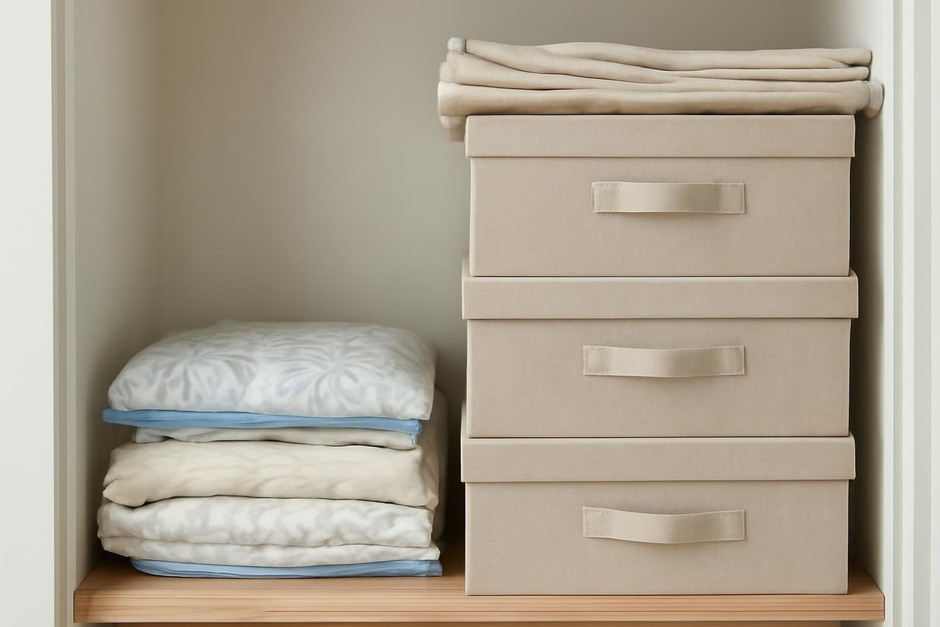
When changing over from summer sheets to heavier blankets or swapping out throw pillows for the season, the question of how to store textiles well and efficiently becomes immediate. Two common approaches—compression (vacuum or zip) bags and breathable containers (cotton boxes, woven baskets, archival boxes)—aim to solve overlapping problems but follow different principles. Below is a close comparison that connects these design principles to small, concrete examples so you can choose the right approach for your space and fabrics.
Core principles behind each approach
Compression storage: minimize volume and deter pests
Compression bags remove air around textiles so bulky items occupy less space. The practical benefits are straightforward: you can fit bulky winter blankets, down duvets, or multiple sweaters into a single shelf or under-bed drawer. Compression also keeps dust out and reduces the number of nesting sites for insects.
What compression does not address directly is moisture control, fabric stress from long-term folding, or the effects of reduced airflow on natural fibers. Treat compression as a spatial and short-to-medium-term protection strategy.
Breathable storage: preserve fabric structure and allow moisture exchange
Breathable boxes—containers made from cotton, cardboard, or breathable synthetic materials—let air move around stored textiles. This reduces the risk of trapped moisture and makes it possible for natural fibers to relax without developing odor or mildew. Breathable storage also reduces crushing of delicate textures like linen slubs, silk scarves, or loosely knitted wool.
However, breathable containers typically require more storage space and careful insect management (moth deterrents or regular inspection).
Small examples: how each approach treats common items
- Wool sweater: Compression will save space but may flatten the knit and increase creasing if kept compressed for months. Breathable storage lets the sweater retain loft and reduces long-term stress on stitches.
- Down duvet: Compression is highly attractive here: down regains loft with airing and the bags keep dust out. For long-term storage, allow a season of rest in breathable storage to avoid repeated compression cycles.
- Bed sheets (cotton or linen): Sheets tolerate compression well, but linen benefits from breathable storage to avoid mustiness. For sheets used as guest bedding, a breathable box with a sachet is a good compromise.
- Heirloom or delicate fabrics: Store in archival-quality, acid-free breathable boxes—avoid vacuum compression entirely to prevent permanent creasing or fiber damage.
Practical trade-offs to weigh
- Space vs. fabric health: Compression wins where space is tight; breathable storage wins where fabric longevity matters.
- Climate considerations: In humid climates, breathable storage with moisture control (silica gel packets rotated occasionally) lowers mildew risk more reliably than sealed compression bags that can trap residual moisture.
- Accessibility and rotation frequency: If you switch items often (every few weeks), compression bags become a hassle. For seasonal rotation once or twice a year, either method works with the right prep.
- Pest management: Compression keeps out dust and insects more effectively but should be paired with pre-cleaning. Breathable containers require preventive measures such as cedar blocks, lavender sachets, or periodic inspections.
Guidance for choosing the right approach
Ask three quick questions
- How limited is your storage space? If you are under a strict cubic-foot budget, compression is a pragmatic choice.
- What are the fabric types? Natural, delicate, or heirloom textiles benefit from breathable storage; bulky synthetics and down tolerate compression.
- What is your climate and storage location? Humid basements or attics push you toward breathable solutions and dehumidification; dry, temperature-stable closets are suitable for compression if items are fully dry and clean.
Practical decision scenarios
- Small city apartment, tight closet space: Use high-quality compression bags for bulky blankets and folded winter coats. For a few favorite knits, keep a breathable box to preserve shape.
- Rural home with a dry linen closet: Favor breathable cotton boxes with cedar sachets for most linens; reserve compression for surplus pillows or rarely used bulky items.
- Humid climate or attic storage: Avoid sealed compression unless you also control humidity. Opt for breathable boxes, silica packets, and occasional airing to prevent mildew.
- Heirloom textiles or seasonal decor with sentimental value: Prioritize breathable, archival-friendly storage to avoid irreversible fiber damage.
Final tips regardless of method
- Always clean and fully dry textiles before storing.
- Label containers with contents and a date; include a note of any treatments used (moth deterrent, silica pack replacement date).
- Air and inspect stored items at least once per season to catch any issues early.
Choosing between compression bags and breathable boxes is less about which is universally better and more about matching principles to needs: space, fabric type, climate, and how often you access the items. With the examples and scenarios above you can make a clear choice and adopt a few preventive steps that keep linens ready for the next season with minimal fuss.